Current

Current work and updates

4/2/2026

Current image

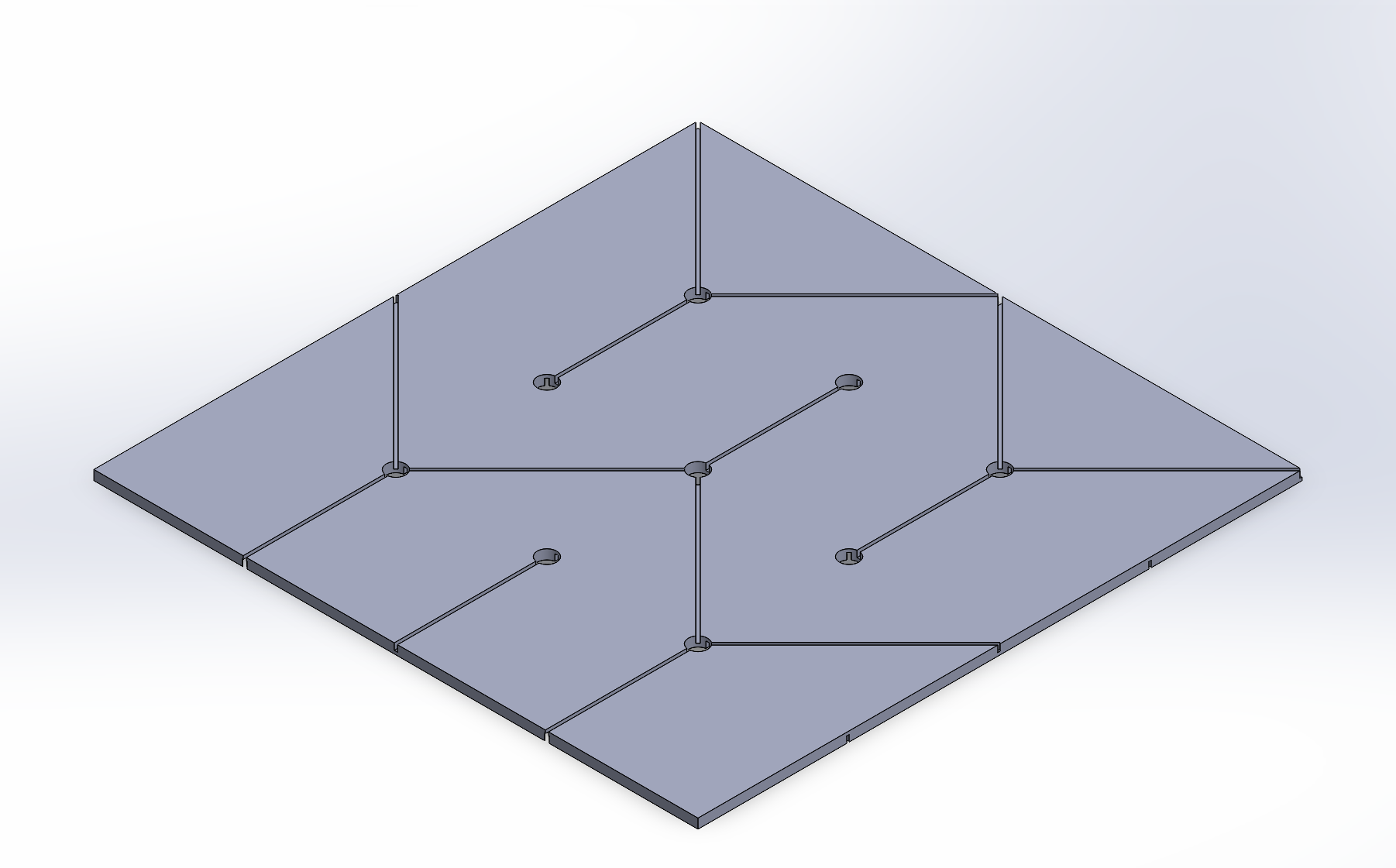
Application of the Herringbone Tessellation

Engineering: Design, SolidWorks

April 2026 - present

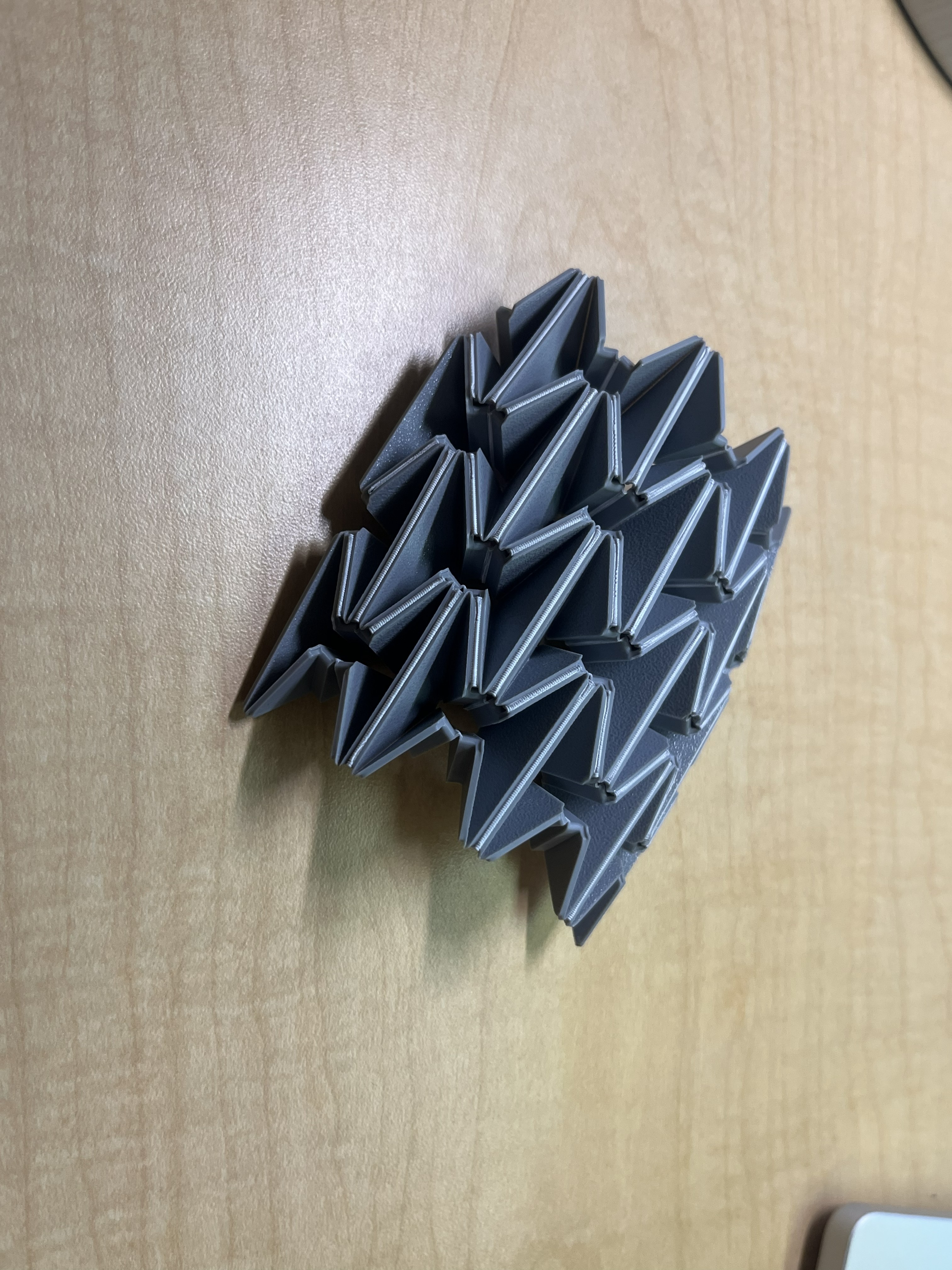
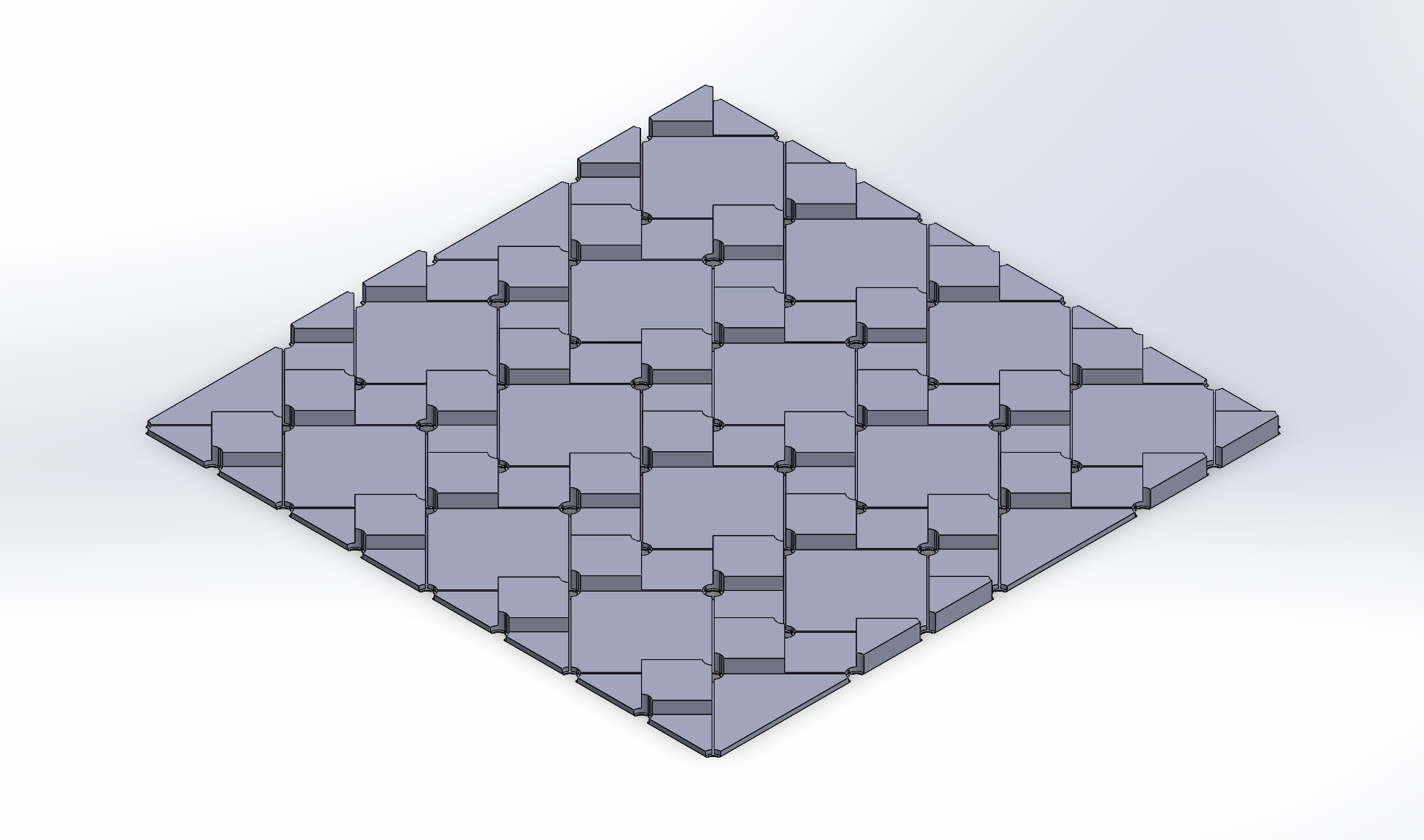
In progress to apply zero-thickness geometry in SolidWorks. For context, most researchers across the U.S. (including UIUC, CalTech, and Georgia Tech), utilize the Miura-ori fold, or the herringbone tessellation, to explore the emerging field of origami metamaterials.

3/31/26

Current image

Origami Waterbomb Design using Super PLA+ (Overture)

Engineering: Materials, Design

March 2026 - present

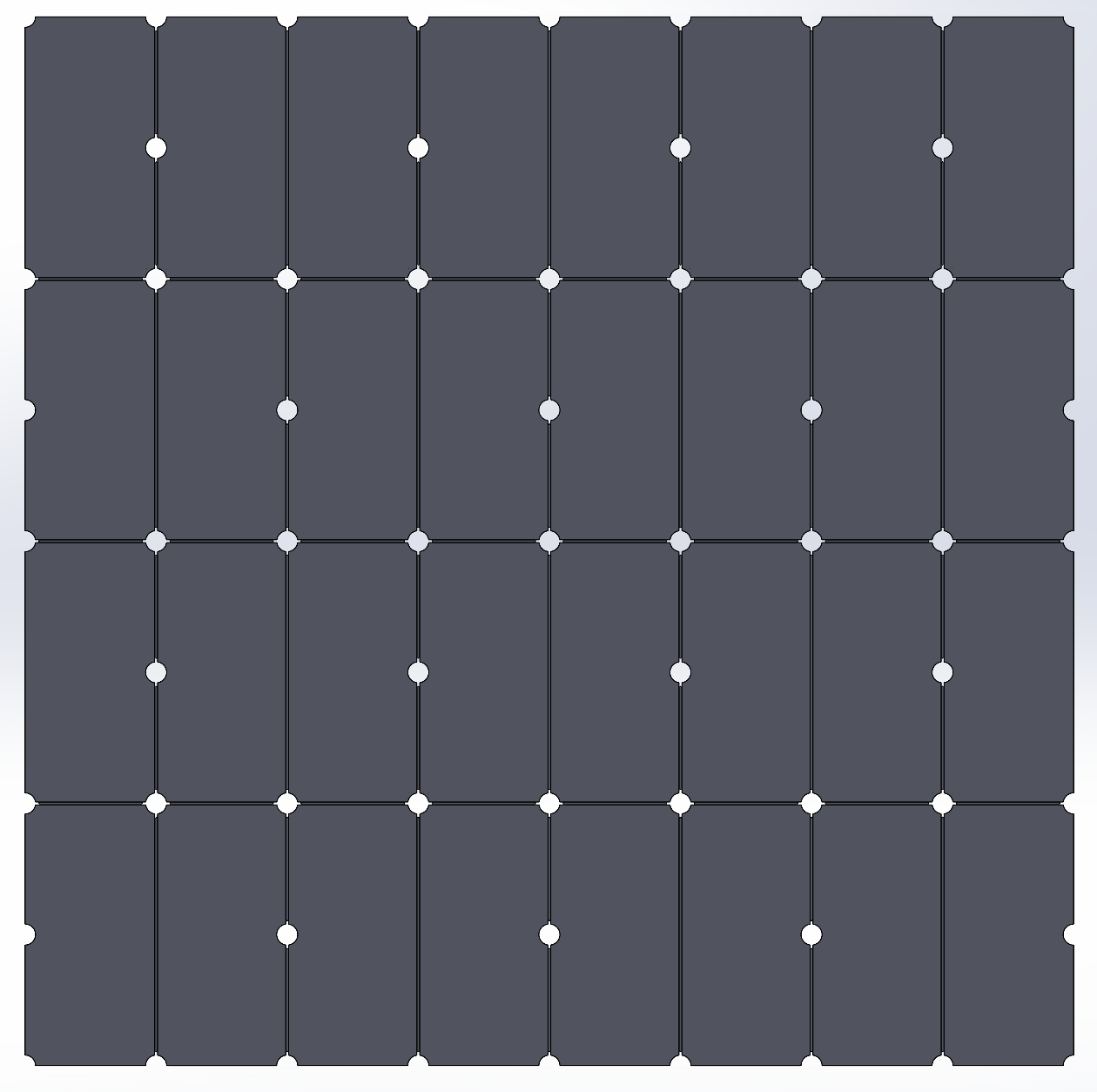
Discovered optimal dimensions for a 3D printer with 0.4 mm nozzle:

- Hinge height: 4 mm; 2 mm is too brittle

- Hinge spacing: 4 mm

- Main thickness: 1.2 mm

- "Zero Thickness" Height: 2.8 mm (Main thickness * 2 + 0.4 mm)

* Currently difficult to crease the folds to make the waterbomb design. I plan to use the formulas from this research paper on Zero Thickness 3D Origami Designs.

Failures (including Rock PLA that is not an optimal material):

3/23/26 - 3/30/26

3D Printed Origami Annotated

Origami Design Applications on Flexible vs. Brittle Materials

Engineering: SolidWorks, 3D Printing

March 2026 - Present

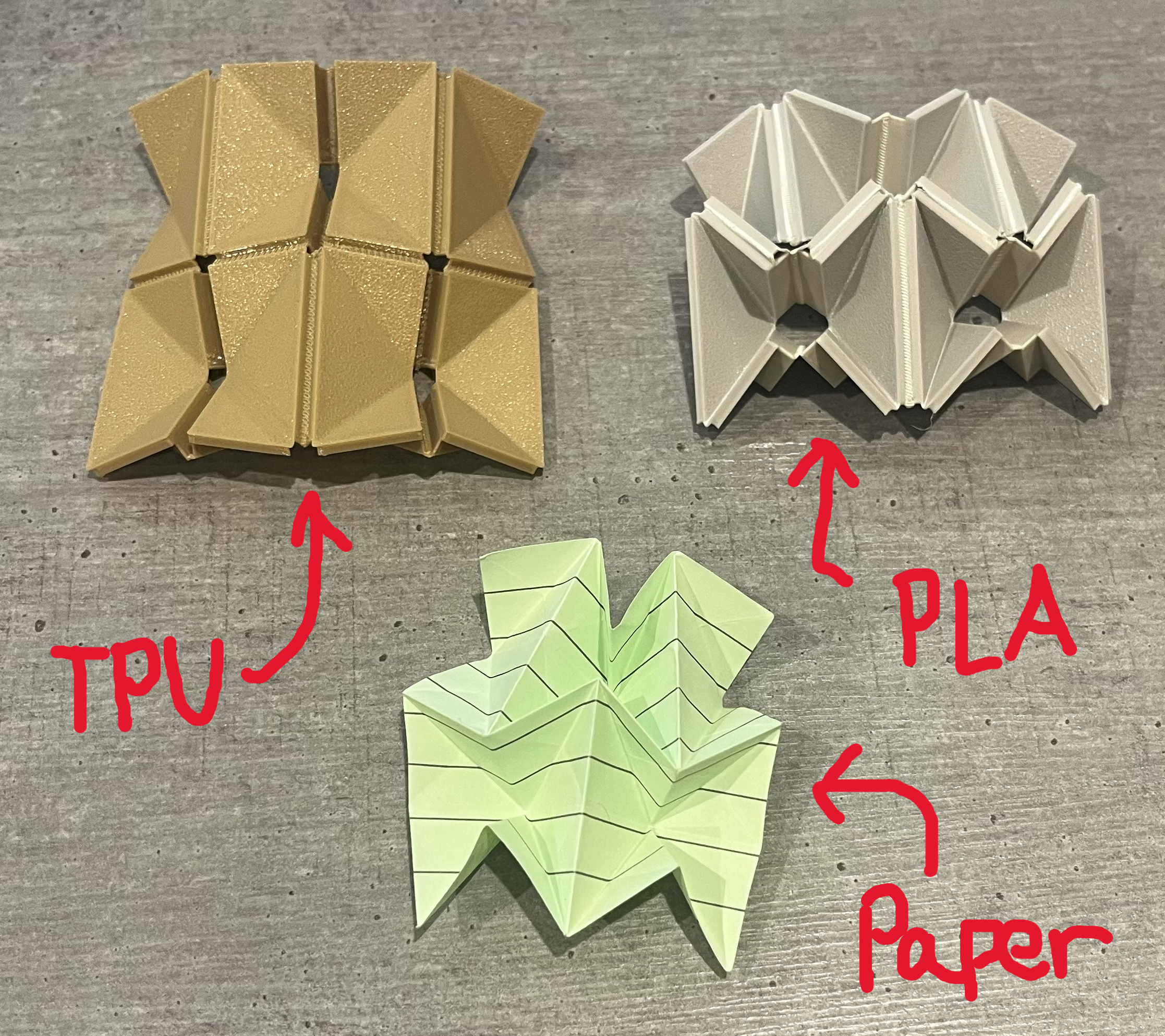
Tested multiple origami waterbomb designs with brittle PLA material (Overture Rock PLA) to solve strain and flex issues. Though the Rock PLA is used for aesthetic purposes popular in startups, I plan to utilize Overture's Super PLA+ in the future because of its superior durability in applications like robotics. I also plan to integrate self-folding mechanisms, heavily inspired by Tokyo University's multi-material design that self-folds underwater.


So far, TPU is best for deployable systems, from compacted to expanded due to its strong elasticity. PLA is best for static designs, such as keeping the folds intact.